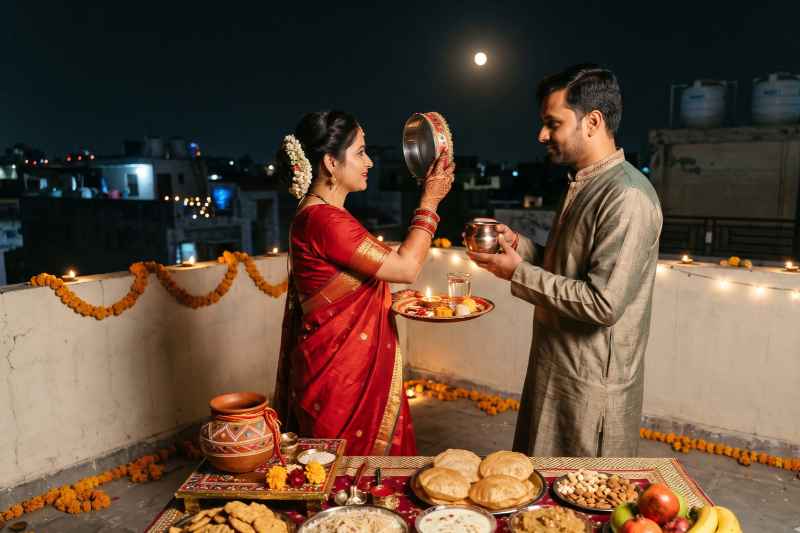
Karva Chauth is one of northern India’s cherished festivals, observed as an expression of marital devotion, companionship and prayers for the well-being of one’s spouse. Traditionally, the festival brings together fasting, family customs, storytelling and community gatherings, reflecting generations of shared traditions.
Yet, beyond its rituals, Karva Chauth also offers a glimpse into India’s rich culinary heritage, where food carries memories, regional identities and the traditions of families.
The Tradition of Sargi
For many women observing Karva Chauth, the day begins before sunrise with sargi, the pre-dawn meal traditionally prepared or offered by the mother-in-law. More than a meal, sargi represents affection, blessings and the bond between generations.
Its contents vary across households and regions. Fruits, nuts, sweets, savoury snacks and traditional preparations may all find a place in the meal. Pheni, a fine vermicelli preparation, is particularly associated with the occasion in several northern Indian households.
The tradition reflects how food becomes an expression of care. Through sargi, a family custom is carried forward, connecting generations through familiar tastes and shared memories.
Regional Flavours That Define the Festival
Although Karva Chauth is widely associated with Punjab, Haryana, Rajasthan, Uttar Pradesh and Delhi, the food prepared for the occasion varies considerably across communities.
In Punjab and Haryana, traditional sweet preparations such as pinni and panjiri are familiar favourites. Pinni is made by roasting flour in ghee and combining it with ingredients such as sugar or jaggery, nuts and cardamom. Panjiri, prepared in several regional styles, may include roasted flour, nuts, seeds and other ingredients.
These preparations are valued not only for their taste but also for their place in household customs. Recipes are often passed down through generations, with each family retaining its own preferred ingredients and methods.
Savoury foods also have a place in festive preparations. Mathri, a crisp snack made from flour and seasoned with spices, is commonly prepared in many North Indian households. Its variations may include different seasonings and cooking techniques, reflecting local preferences.
In some families, makhana kheer, made with fox nuts, milk and sugar, adds a sweet touch to the festive menu. Other households prepare regional sweets, fried snacks and homemade delicacies according to family tradition.
Together, these foods illustrate the diversity of Karva Chauth cuisine. The festival does not have one fixed menu; rather, its culinary identity is shaped by regional ingredients, household recipes and individual customs.
Food, Fasting and the Rhythm of Worship
Karva Chauth is traditionally observed through a day-long fast, followed by prayers and rituals associated with the sighting of the moon. The food prepared before the fast and the meal shared after its completion become important parts of the day’s rhythm.
The rituals and practices vary among communities and families. For many, the evening brings together the karva, the puja thali, the story associated with the observance and the anticipation of the moonrise.
The culinary traditions surrounding the festival are woven into this experience. Preparing food in advance, arranging festive plates and sharing sweets with family members all contribute to the occasion’s sense of togetherness.
Food, in this context, is more than sustenance. It becomes part of a larger expression of devotion, affection and family life.
The Changing Character of Festive Food
Like other Indian festivals, Karva Chauth is also evolving. Packaged sweets, ready-made sargi assortments and restaurant offerings have become more accessible, particularly in urban households. At the same time, many families continue to prepare traditional recipes at home.
These changes do not necessarily mean that older customs are disappearing. In many cases, traditions are being adapted to contemporary schedules and lifestyles while retaining their essential meaning.
Some families may prepare elaborate festive spreads, while others choose a few familiar dishes. Some continue recipes inherited from parents and grandparents; others introduce new variations. Each approach reflects the way culinary traditions remain living practices rather than fixed historical records.
Preserving these food traditions therefore involves more than reproducing recipes. It requires documenting their regional variations, understanding their place in family life and encouraging younger generations to learn the techniques and stories associated with them.
Preserving the Culinary Heritage of Karva Chauth
India’s food heritage is built not only around celebrated dishes but also around everyday practices: the recipe remembered by a grandmother, the sweet prepared for a particular festival, or the family custom that brings people together year after year.
Karva Chauth offers an opportunity to recognise this quieter dimension of culinary heritage. Its sargi preparations, traditional sweets, savoury snacks and regional variations tell stories of relationships, migration, local ingredients and changing household practices.
As these traditions move from one generation to the next, documenting them becomes increasingly important. The aim is not to prescribe a single way of celebrating the festival, but to recognise and preserve the diversity of its culinary expressions.
Ultimately, what distinguishes Karva Chauth is the way food and ritual come together. Behind every preparation lies a memory, a family custom or a regional practice that gives the festival its distinctive character.
By preserving these stories, we preserve more than recipes. We preserve the relationships, knowledge and cultural continuity that make India’s culinary heritage so rich.