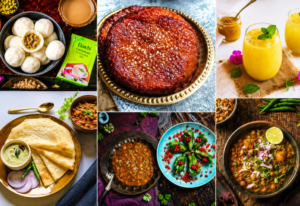
A Culinary Heritage Born from Mountains & Royal Courts
Jammu & Kashmir’s cuisine is a spectacular blend of the bounty of the Himalayas, the elegance of Persian courts, and the warmth of community-centric dining. It is divided into two distinct yet harmonious culinary worlds:
- Kashmiri Cuisine
Luxurious, aromatic, Persian-Central Asian roots - Dogra Cuisine (Jammu Region)
Earthy, tangy, wholesome, tied to local agriculture and pastoral life
How Geography Shapes Food
| Zone | Climate | Food Influence |
| Kashmir Valley | Cold, snow-prone, fertile land | High use of meat, dried vegetables, warming spices |
| Jammu Plains | Sub-tropical, agricultural | More lentils, dairy, wheat, and tangy flavours |
| Ladakh (if included separately later) | High altitude desert | Barley-based diet, yak butter, tsampa |
Kashmir’s winters encouraged drying, smoking, and fermenting, survival meets gastronomy.
History of Kashmiri Cuisine
Kashmir has been shaped by centuries of cultural exchange:
| Era | Culinary Influence |
| Ancient Kashmir | Rice cultivation, lake farming, vegetables & herbs |
| 14th Century — Persian Rule | Birth of Wazwan; introduction of saffron, dry fruits, lamb-based feasts |
| Central Asian Traders | Pilaf styles, slow-cooked meats, kebabs |
| Mughal Admiration | Elevated cuisine to royal prestige |
Core Ingredients and Why They Matter
| Ingredient | Purpose |
| Kashmiri chillies | Deep red colour without too much heat |
| Mustard Oil | Natural preservative + adds bold aroma |
| Saffron | Aroma, colour, medicinal benefits |
| Fennel & Dry Ginger | Warming spices that aid digestion |
| Lotus Stem (Nadur) | Locally available in Dal & Wular lakes |
| Yoghurt (Dahi) | Adds tang, retains moisture in slow-cooked meats |
Food is designed to keep the body warm, strong, and nourished for harsh winters.
Signature Dishes with Cultural Stories
Wazwan — Food of Honour
A 36+ dish wedding feast symbolising brotherhood; served on a shared traami, celebrating unity and equality.
Rogan Josh
Meat infused with Kashmiri chillies & cold-pressed oil — introduced by Persians, perfected by Kashmiris.
Yakhni
Curd-based delicate gravy from ancient Vedic cooking principles.
Gushtaba
Called “The King of Wazwan”, served last, signalling the end of the feast.
Modur Pulav
Saffron dessert rice, made during festivals to honour abundance.
Nadur Yakhni & Monje
Reflects the valley’s unique wetland farming culture.
Dogra Cuisine — Flavours of Jammu
Wheat-growing plains → dominance of rotis, rustic gravies, smoked flavours
Key classics:
- Kaladi Kulcha: mountain cheese + toasted bread — beloved street snack
- Bhadarwahi Rajma Chawal: heirloom beans grown in the hills
- Khatta Maas: tamarind-based tangy meat gravy
- Ambal: pumpkin cooked with jaggery + mustard seeds
Festival & Ritual Foods
| Festival | Special Dish |
| Eid | Wazwan courses |
| Navreh (Kashmiri New Year) | Dishes with symbolic foods: walnuts, curd rice, etc. |
| Lohri in Jammu | Til-gud sweets, makki di roti variations |
| Wedding Rituals | Gushtaba and Rista mandatory for honour |
Health & Ayurvedic Relevance
Warming spices = perfect for snowy climate
Curd-based gravies aid digestion of heavy meats
Dry fruits improve strength, immunity
Recent Blog Posts
Anand Chat Chopal
05 May, 2025
From Tawa to Triumph: Why the Dosa Will Always Be...
24 Apr, 2025
A Morning at Sagar Ratna – A Slice of South...
21 Apr, 2025
Latest News
Where devotion rests upon a cool platter
13 Aug, 2026
Sawan: The sacred flavours of the monsoon
29 Jul, 2026
Cuisine of abundance, charity and continuity
02 Jul, 2026