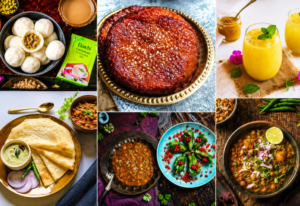
A Tradition of Sweet, Savoury, and Seasonal Eating
Gujarat’s vegetarian cuisine is rooted in Jain-Vaishnav culture, showcasing seasonal produce, gentle cooking, and a signature sweet-and-spicy balance.
How Geography Shapes Food
| Zone | Climate | Food Influence |
| Kutch & Saurashtra | Arid and coastal | Millet, legumes, preserved vegetables |
| Central Gujarat | Fertile plains | Dairy, wheat, rice |
| South Gujarat | Moist, green belt | Fresh vegetables, fruits |
Scarcity in arid zones led to comfort snacks and long-lasting foods.
History of Gujarati Cuisine
| Era | Culinary Influence |
| Ancient Pastoral Communities | Dairy, millet staples |
| Jain and Vaishnav Traditions | Strict vegetarianism |
| Trade with Africa, Arabia | Spices, groundnuts, sugarcane |
Core Ingredients and Why They Matter
| Ingredient | Purpose |
| Besan | Binding, texture for farsan |
| Jaggery and Sugar | Balances spices, energy source |
| Groundnut Oil | Local cooking medium |
| Millet varieties | Drought-resilient base food |
Signature Dishes with Cultural Stories
Dhokla, evolved from ancient fermented rice-lentil batters
Thepla, travel-friendly snack preserving fenugreek leaves
Undhiyu, winter harvest festival dish cooked in upside-down pots
Kadhi-Khichdi, soothing home meal for all occasions
Khaman, airy steamed farsan popular worldwide
Festival & Ritual Foods
| Festival | Special Dish |
| Uttarayan | Undhiyu and jalebi |
| Navratri | Fasting snacks, kuttu meals |
| Weddings | Sweets and farsan-rich thali |
Health & Ayurvedic Relevance
Fermented foods support digestion
Millets support stamina in hot climate
Jaggery maintains energy levels
Fun Fact
Gujarat consumes the highest amount of snacks (farsan) per capita in India.
Recent Blog Posts
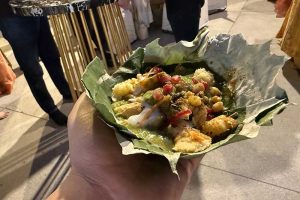
Anand Chat Chopal
05 May, 2025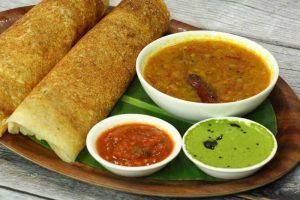
From Tawa to Triumph: Why the Dosa Will Always Be...
24 Apr, 2025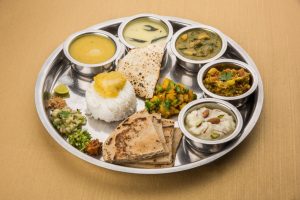
A Morning at Sagar Ratna – A Slice of South...
21 Apr, 2025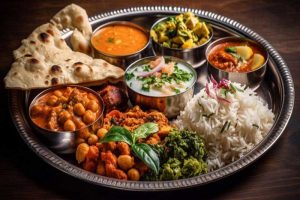
Latest News
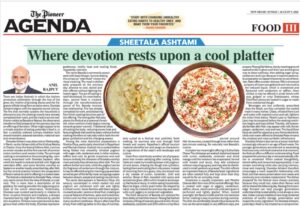
Where devotion rests upon a cool platter
13 Aug, 2026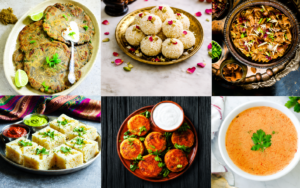
Sawan: The sacred flavours of the monsoon
29 Jul, 2026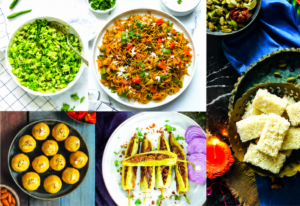
Cuisine of abundance, charity and continuity
02 Jul, 2026